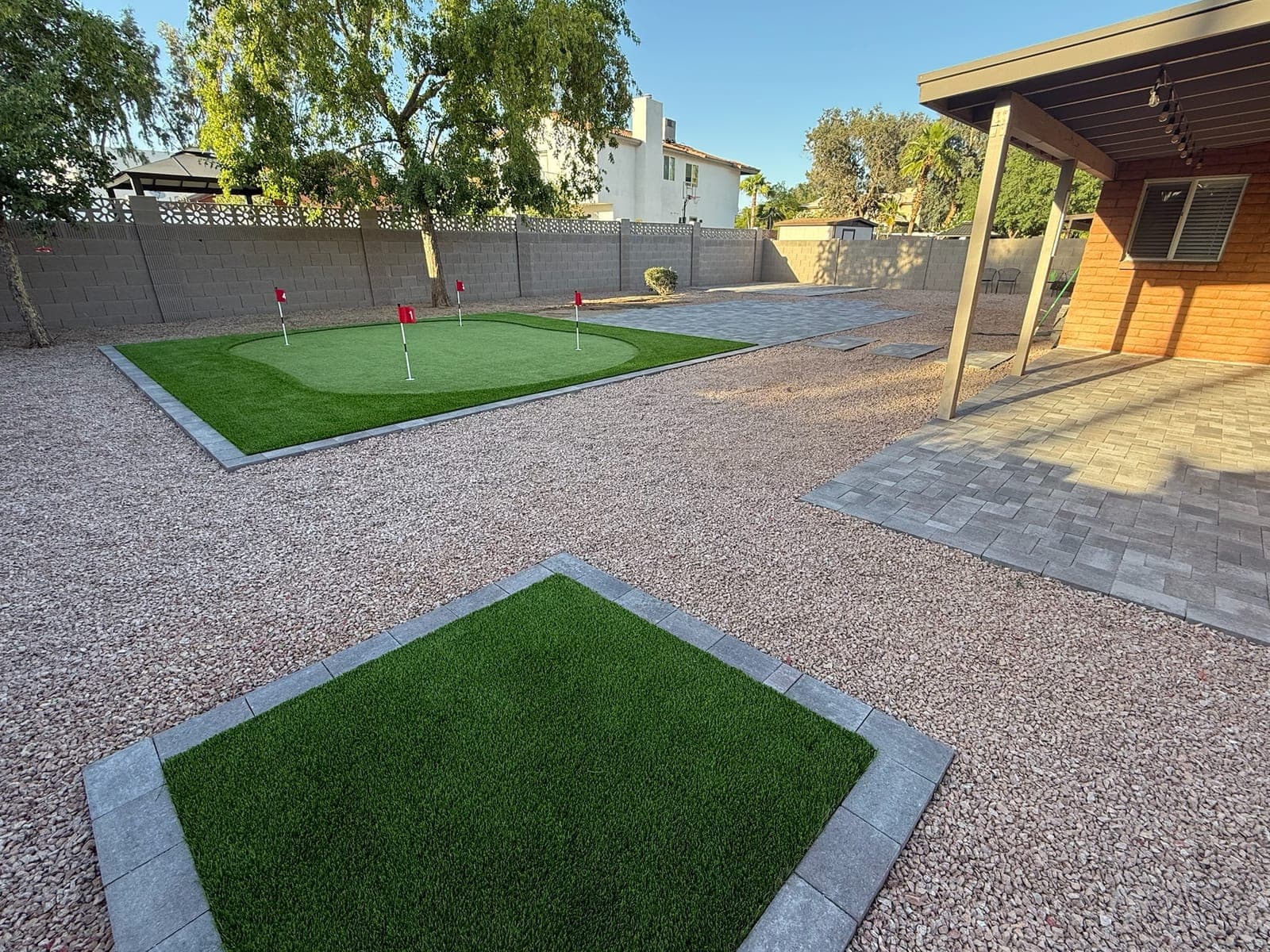
Backyard Putting Greens in Gilbert & Scottsdale, AZ — laser-graded base, nylon surface, 9–11 stimp.
A putting green is a grading job with turf on top. If the contours were not built into the base, the ball will tell you within one afternoon.
Anyone can staple green turf to flat ground. What makes a green worth having is contour you can read and speed you can trust — and both of those are built underneath, before the surface ever arrives.
Three Green
Builds.
The Practice Green
200–400 square feet with three to four cups and gentle, readable break. Sized to fit a normal Valley backyard alongside a turf lawn and a patio rather than consuming the whole yard. This is where most people should start: enough green to practice lag putting and short break, not so much that it dominates the space.
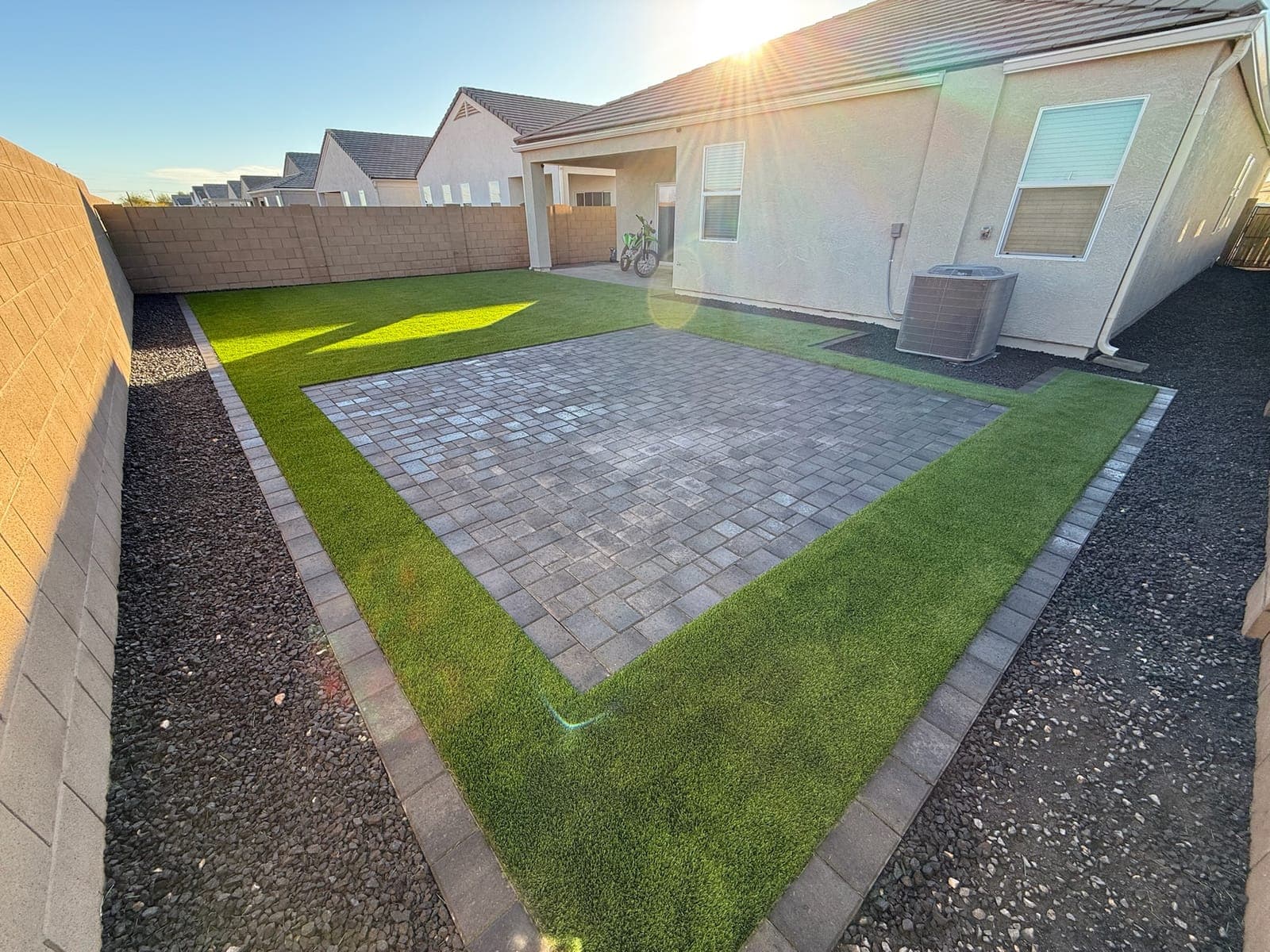
Green + Chipping Pad
The practice green plus a separate approach surface — a denser, shorter fiber that lets a wedge take a real divot-free strike and holds a check on landing. Add a fringe collar in a taller, coarser turf and you can practice the shots that actually cost strokes rather than only rolling putts.
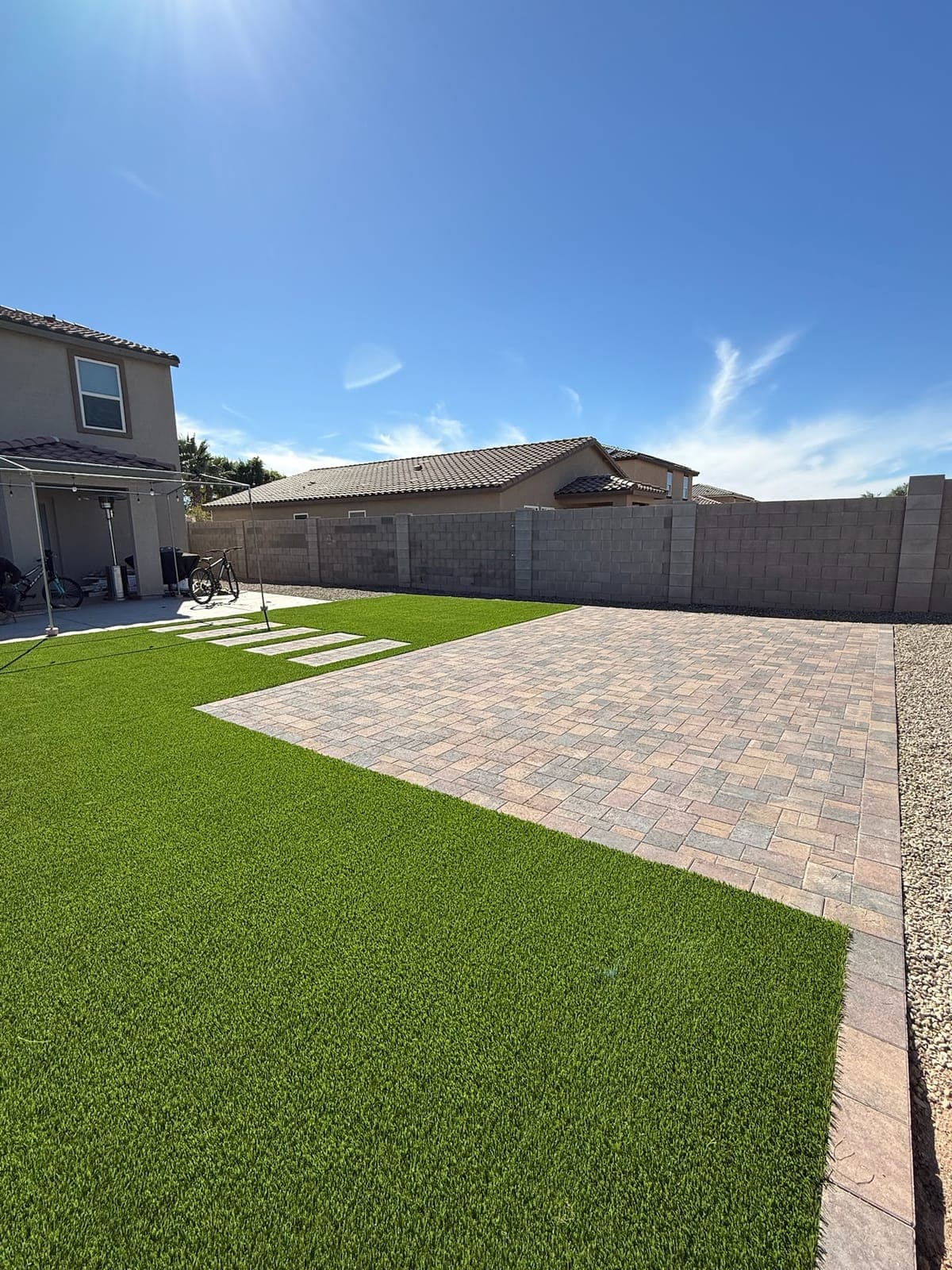
Full Short Game Complex
Multi-tier green with genuine elevation change, a sand bunker with proper drainage and a compacted liner, and multiple approach angles. This is a serious build — real grading, retaining at the tier transitions, and drainage engineering — and it is the one that meaningfully changes a handicap.
The break is
in the base.
Not the turf.
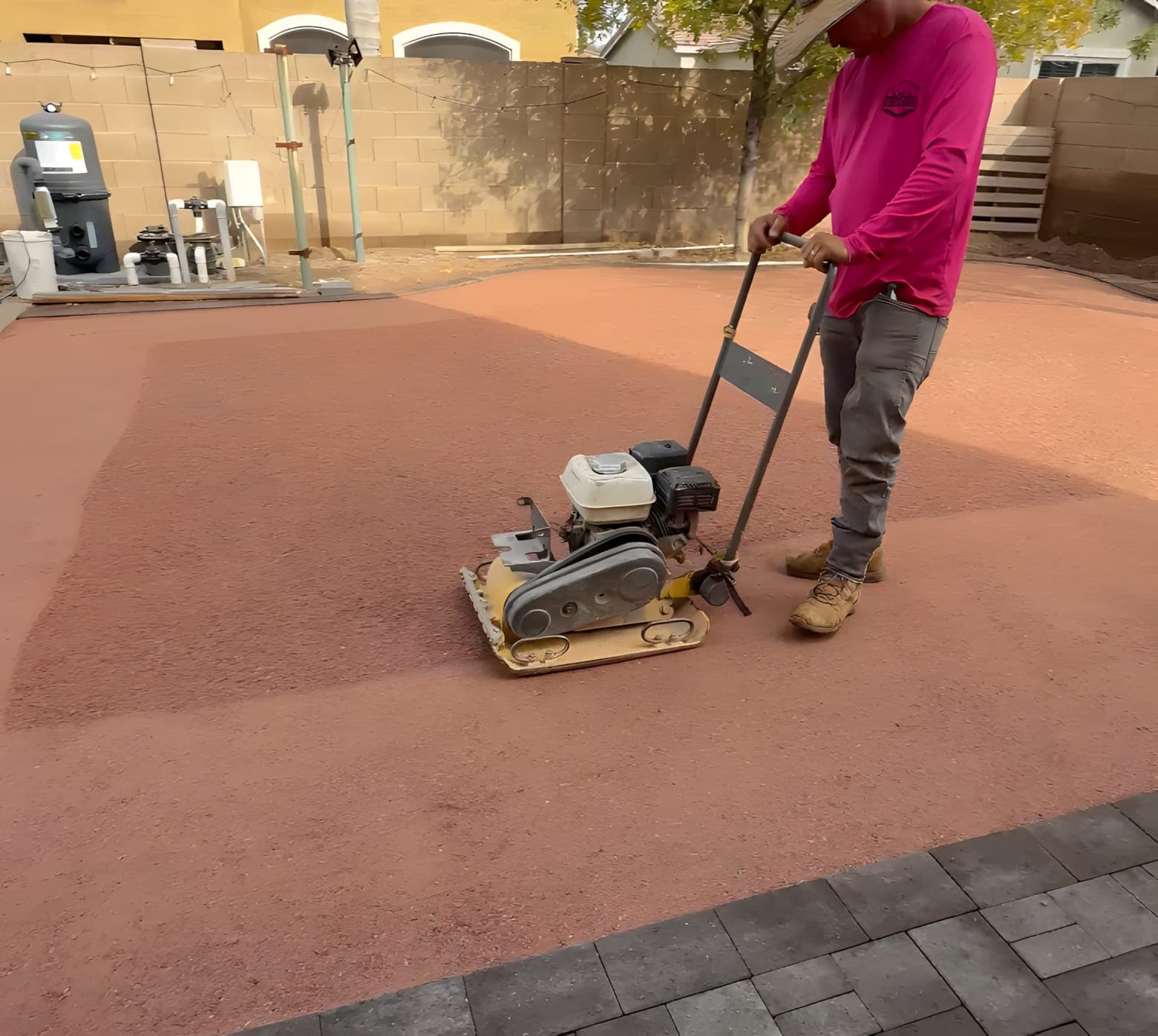
We shape contour into the compacted aggregate itself and laser-grade it to confirm the surface before any turf is unrolled. A green whose slope was created by pushing turf around on flat ground putts like a rug with a wrinkle in it — the ball breaks where the wrinkle is, not where the read says, and it is unfixable after the fact.
The surface is nylon, not the polyethylene used on lawn turf. Nylon has the stiffness to hold a consistent roll and the memory to stand back up after being walked on all week. Lawn turf on a putting green gives you a slow, dead, inconsistent roll that no amount of brushing corrects.
Speed is set by fiber height and by how much silica sand we top-dress into the surface. More sand, faster roll. We tune it with you on site after install — most clients land between 9 and 11 on the stimpmeter, which is a well-kept municipal course. Anything faster than 12 is unpleasant in a backyard with real break in it.
not polyethylene
What separates
a green from turf.
Cup Placement
Regulation 4.25-inch cups set on a proper collar so the edge does not fray and the ball drops rather than lipping off a turf lip. We place them to give genuinely different reads — uphill, downhill, and across the primary break — so a small green still offers real variety instead of the same putt from four directions.
Sub-Surface Drainage
Contoured greens create low points by definition, and a low point without drainage is a puddle that sits for a day after monsoon rain and eventually sours the base. We build perforated drain lines into the aggregate at every collection point and daylight them away from the green.
Fringe & Collar
A band of taller, coarser turf ringing the putting surface. It is not decoration — it is what makes a chip behave correctly, giving the ball something to check against instead of releasing across the green like it was hit onto a table. It also visually defines the green edge, which matters enormously in photos.
Sun & Shade Planning
A green in full west sun is unusable from 2 to 6 PM in summer, which is when most people would actually practice after work. We look at where the shade falls at the hours you play and position the green — or add a structure on the approach side — so the thing gets used rather than admired.
Nylon. Poly.
Top-dressing.
Three decisions set how a green rolls. Two of them are irreversible once the base is closed up.
Nylon Putting Surface
Stiffer fiber with genuine memory, so the roll stays consistent across the whole surface and through the week. It is the only material that produces a true putt. Costs more per square foot than lawn turf and is the entire reason the green works.
Silica Top-Dressing
Rounded silica brushed into the surface. It supports the fiber and sets green speed — more sand means a faster roll. The advantage is that it is adjustable after the fact, so we tune the speed with you once you have actually putted on it rather than guessing from a spec sheet.
Lawn Turf as Green
The shortcut on cheap quotes: run the same polyethylene lawn turf across a flat pad and call it a putting green. It rolls at 5–6, mats down in the walking lines within a season, and cannot be tuned. If a quote does not name a distinct nylon putting product, it is this.
Putting Greens
FAQ.
Practice at home.
Score on Saturday.
Free site visit, contour and cup layout sketched in your actual yard, honest guidance on how much green the space can carry, and a written quote with the grading itemized.